


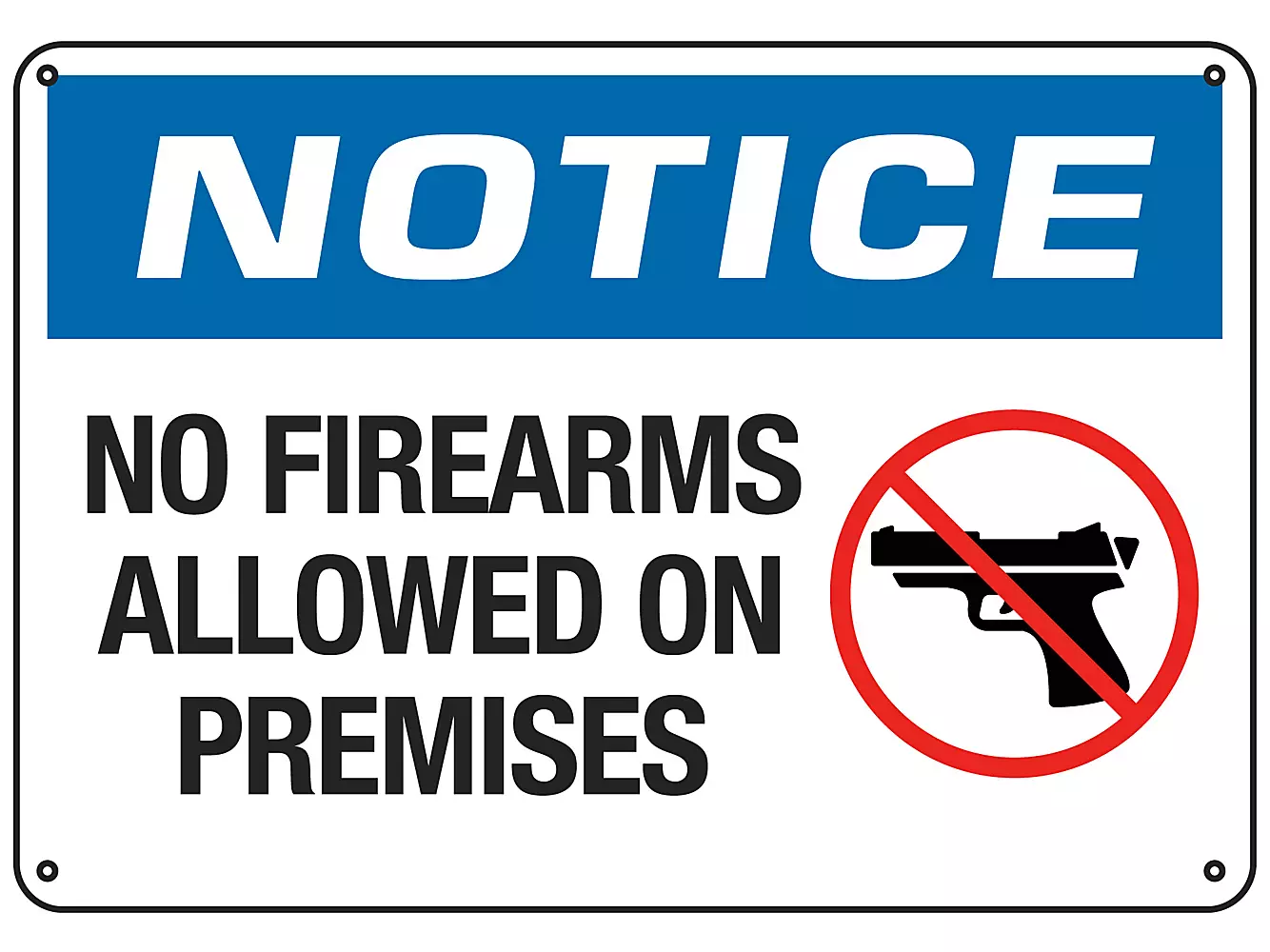
In a significant development for Second Amendment jurisprudence, the U.S. Supreme Court today granted certiorari in Wolford v. Lopez, agreeing to review a challenge to Hawaii’s restrictive concealed carry laws. The case, docketed as No. 24-1046, centers on whether states can presumptively ban licensed handgun carriers from bringing firearms onto private property open to the public—such as stores, restaurants, or malls—unless the property owner explicitly grants permission. This decision comes amid ongoing debates about the scope of gun rights following the Court’s landmark 2022 ruling in New York State Rifle & Pistol Ass’n v. Bruen, which struck down discretionary concealed carry permitting schemes and emphasized historical traditions in evaluating firearm regulations.
The grant, limited to the first question presented in the petition, positions Wolford as a potential bellwether for how far individual self-defense rights extend into private spaces, pitting them against property owners’ prerogatives. With oral arguments slated for this winter or early next year, the case could influence similar laws in states like California and New York, where gun control measures remain stringent.
The controversy stems from Hawaii’s firearms statutes, which impose a default prohibition on carrying concealed handguns on private property accessible to the public, even for those holding valid concealed carry permits. Under these rules, permit holders must obtain affirmative, express consent from property owners before entering with a firearm; otherwise, they risk criminal penalties. Hawaii, known for its strict gun laws, claims this as a means to enhance public safety in commercial and social settings while respecting private property rights.
Petitioner Christopher Wolford, a licensed concealed carry holder, challenged the law after encountering restrictions that he argued rendered his permit effectively useless in everyday scenarios. Joined by other plaintiffs, Wolford contended that the presumptive ban infringes on the constitutional right to bear arms for self-defense, as recognized in Bruen. The law is alleged to create an undue burden by requiring carriers to seek permission on a case-by-case basis, chilling the exercise of Second Amendment protections.
Respondents, led by Hawaii Attorney General Anne E. Lopez, defend the policy by emphasizing that private property is not a public forum and that owners have long-held authority to exclude armed individuals. They point to historical analogs, such as 19th-century restrictions on weapons in sensitive private venues like inns or theaters, to argue that the regulation aligns with the nation’s tradition of firearm oversight.
The case originated in the U.S. District Court for the District of Hawaii, where Wolford’s suit was dismissed, with the court upholding the state’s law as constitutional. On appeal, a panel of the U.S. Court of Appeals for the 9th Circuit affirmed the ruling on September 6, 2024, applying Bruen‘s history-and-tradition test to conclude that the presumptive prohibition does not violate the Second Amendment. The panel reasoned that property owners’ control over their premises trumps any implied right to carry arms without consent, even in spaces open to the public.
Wolford petitioned the Supreme Court for review on April 1, 2025, with the National Rifle Association (NRA) filing an amicus brief in support on May 2, 2025. After a rehearing denial in the 9th Circuit on January 15, 2025, the High Court granted certiorari today, October 3, 2025, focusing solely on the core issue of the 9th Circuit’s holding.
Wolford v. Lopez holds profound implications for the evolving landscape of gun rights in America, particularly in the post-Bruen era. The Bruen decision mandated that gun regulations must be consistent with historical practices, invalidating subjective “may-issue” permitting systems and expanding public carry rights. However, it left open questions about “sensitive places” and private property, creating a patchwork of lower court interpretations.
A victory for Wolford could invalidate default bans like Hawaii’s, compelling states to allow concealed carry in public-facing private spaces unless owners explicitly prohibit it—effectively flipping the presumption in favor of gun owners. This might force businesses nationwide to post clear “no guns” signs or risk becoming de facto carry zones, potentially affecting millions.
Conversely, upholding the 9th Circuit’s decision would limit Bruen‘s expansionary impact, providing a blueprint for gun control in private settings and influencing ongoing litigation over “gun-free” zones in places like parks, bars, and schools.
Broader stakes include federalism, as the ruling may guide how courts scrutinize state laws under the Second Amendment, and public policy. The Department of Justice has weighed in, arguing against the law in a brief that underscores its potential unconstitutionality.
As of October 3, 2025—the start of the Supreme Court’s October Term 2025—the case is in its early appellate stages at the High Court. With certiorari freshly granted, the parties will now file merits briefs: the petitioner’s opening brief is due within 45 days, followed by the respondent’s within 30 days, and a reply within 30 days thereafter.
Oral arguments are expected this winter (December 2025) or early next year (January or February 2026), based on the Court’s typical scheduling for cases granted in the fall. The justices hear arguments from October through April, with decisions issued by the end of the term in late June or early July 2026. Given the case’s complexity and the backlog of other high-profile matters, a ruling could come toward the term’s close, potentially in May or June 2026.
Amicus briefs from interested parties, such as gun rights groups, civil liberties organizations, and state attorneys general, are likely to pour in over the next few months, enriching the debate. Any developments, including argument scheduling, will be posted on the Supreme Court’s docket and SCOTUSblog. Until then, Wolford v. Lopez remains a case to watch over the next year, poised to define the next chapter in America’s gun rights saga.
Subscribe to get the latest posts sent to your email.