


The Davis Law Firm | California Firearms Lawyer
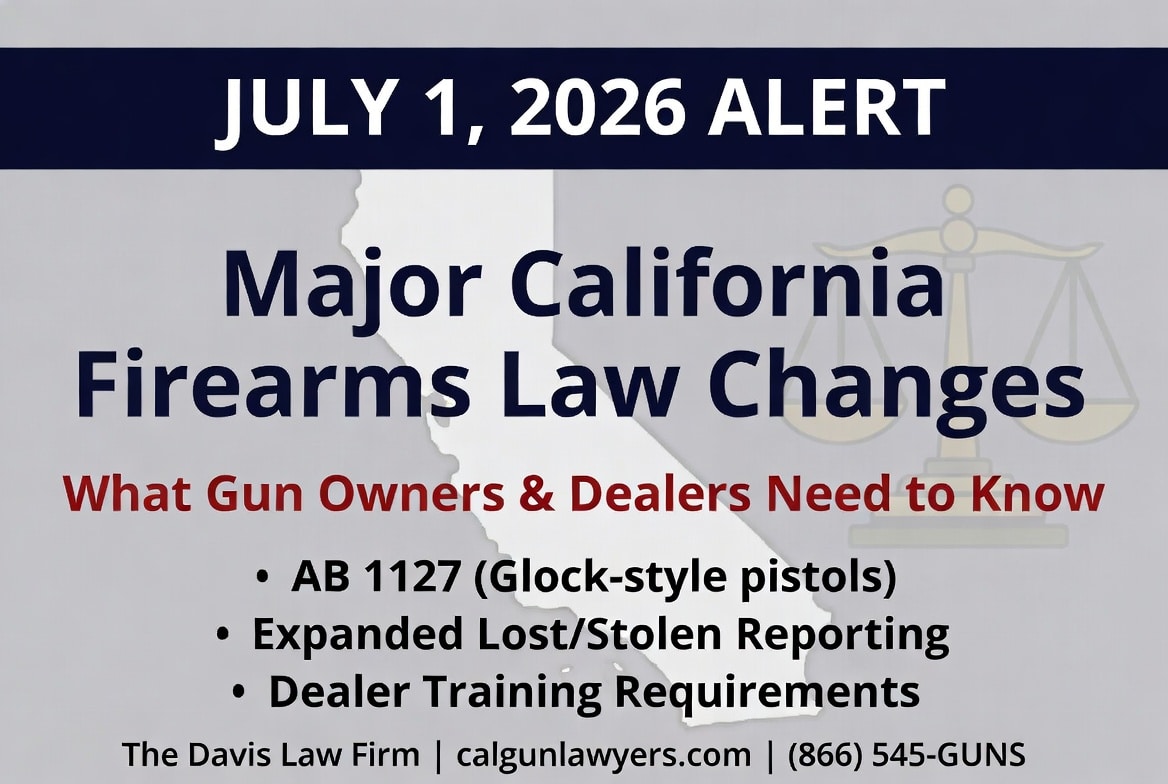
Several important changes to California firearms law take effect on July 1, 2026. While none of these create an immediate ban on possession for law-abiding gun owners, they impose new restrictions on dealers, expand reporting obligations, and increase compliance requirements. If you are a firearms dealer, FFL holder, collector, or someone who owns (or is considering purchasing) certain popular handguns, you should understand these changes now—before the deadline.
Here’s what you need to know.
Effective July 1, 2026, licensed California firearms dealers are prohibited from selling, offering for sale, exchanging, giving, transferring, or delivering any semiautomatic machinegun-convertible pistol.
The law defines a machinegun-convertible pistol as a semiautomatic pistol with a cruciform trigger bar that can be readily converted by hand or with common household tools into a machinegun by installing or attaching a “pistol converter.”
AB 1127 does two distinct things:
Important limitations and exemptions:
Penalties for dealers violating the new sales prohibition (Penal Code § 27595) are not felonies. They escalate as follows:
The felony exposure under AB 1127 attaches only when a converter is actually installed on the pistol, turning it into a machinegun under the expanded definition.
Also effective July 1, 2026, California expands the definition of “firearm” for purposes of lost and stolen reporting to include:
If you lose or have stolen any of these items, you must report it to a law enforcement agency within the existing five-day window. Law enforcement must then enter a description into the Department of Justice’s Automated Firearms System (AFS).
A violation is punishable as an infraction or misdemeanor, depending on the circumstances (repeat or knowing violations can rise to misdemeanor level).
Licensed firearms dealers and any employees who handle firearms or process transactions must complete an annual training course developed by the California Department of Justice, including an examination.
The Firearms Dealer Annual Training Course (FDATC) became available on February 1, 2026. Dealers must achieve a minimum passing score of 70%. The first training cycle must be completed by June 30, 2027.
The state continues preparatory work on microstamping technology. If the Department determines that microstamping components are technologically viable, it will begin related grant and contracting processes. This could eventually affect the sale of certain semiautomatic pistols beginning in 2028, but that is not a July 1, 2026 change.
Before July 1, 2026:
We regularly advise California firearms dealers, FFL holders, collectors, and individual gun owners on compliance with evolving state and federal regulations. Our services include:
If you have questions about how these July 1 changes affect your specific situation, contact us for personalized guidance.
Phone: (866) 545-GUNS Website: calgunlawyers.com
Subscribe to get the latest posts sent to your email.