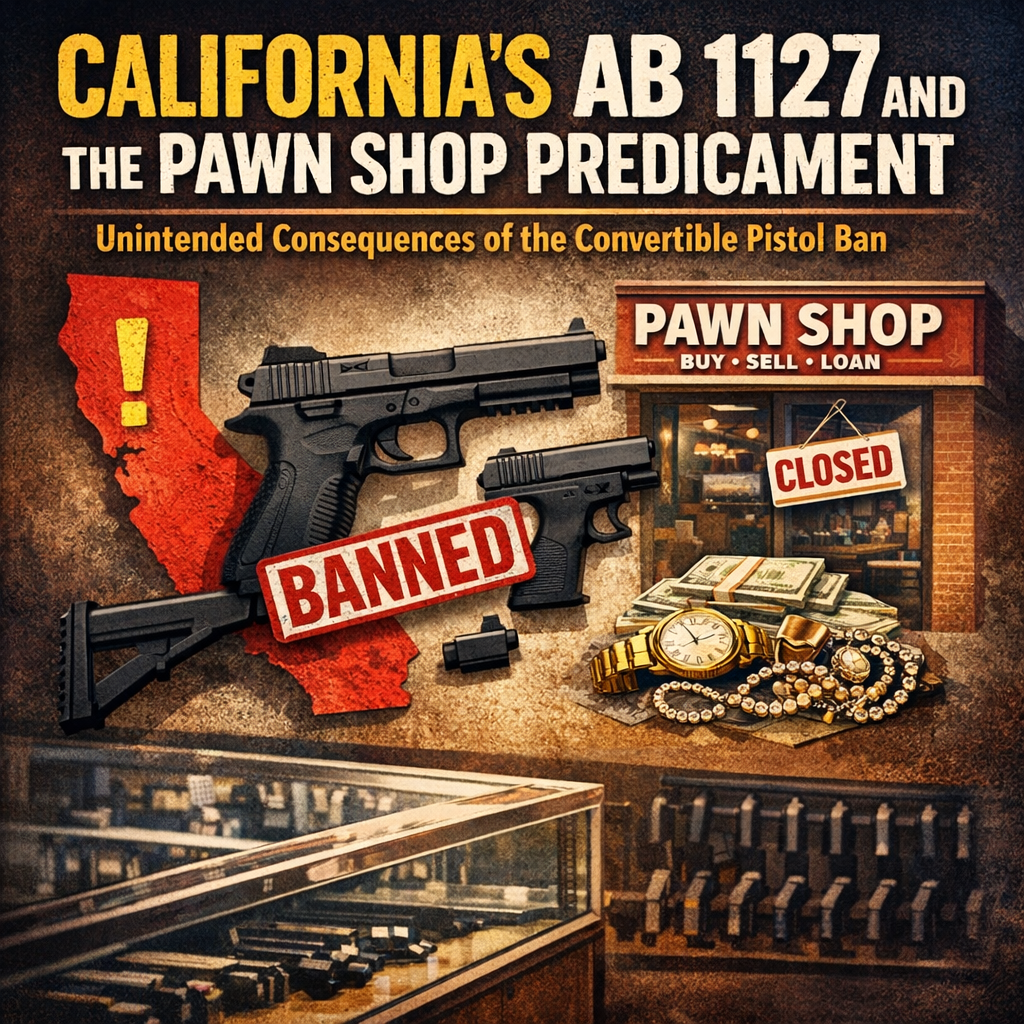
Introduction: A New Era in California Firearm Pawn Regulation
In October 2025, Governor Gavin Newsom signed Assembly Bill 1127 (AB 1127) into law. Effective July 1, 2026, the bill adds Penal Code section 27595, prohibiting licensed firearms dealers from selling, offering for sale, exchanging, giving, transferring, or delivering “semiautomatic machinegun-convertible pistols.” These are defined under the new PC 16885 as semiautomatic handguns with a cruciform trigger bar that can be readily converted into machineguns using a simple “pistol converter” (commonly known as a Glock switch).
However, while the law includes several exemptions—such as sales to law enforcement, transfers for repair, and private party transactions—it notably omits one critical area that is usually included: pawn transactions. This oversight exposes unique vulnerabilities in the pawn industry and creates cascading problems for firearm owners and businesses alike.
The Law Change: From Bill to Ban
AB 1127 emerged amid growing concerns over “DIY machineguns.” Key provisions include:
- Prohibition Scope: Dealers face fines up to $5,000 and license revocation for violations, with exemptions for pre-2026 inventory, military/law enforcement sales, and temporary transfers under specific conditions (e.g., safekeeping per PC 26892).
- Definitions: A “machinegun-convertible pistol” is narrowly tailored to pistols convertible “by hand or with common household tools,” excluding hammer-fired or shielded trigger bar designs.
- Enforcement: The California Department of Justice (DOJ) will oversee compliance, likely updating its DROS system to flag prohibited transfers.
While the law doesn’t retroactively ban possession, its forward-looking retail prohibition seeks to stem the flow of new convertible pistols into civilian hands. Yet, its failure to address pawn redemptions—unlike explicit exemptions for temporary safekeeping—has sparked alarm in the pawn sector.
Unique Issues Facing Pawn Stores in California
Pawn shops occupy a hybrid space in California’s firearms ecosystem, functioning as both lenders and licensed dealers under PC 26700-26920. Unlike traditional gun stores focused on sales, pawn operations revolve around short-term loans secured by collateral, with firearms comprising a lucrative niche due to their high value and liquidity.
This dual role presents distinct challenges under AB 1127:
- Temporary vs. Permanent Transfers: Pawning involves a temporary transfer to the shop, with redemption akin to a “delivery” back to the owner. However, PC 27595(c)(6) only exempts returns after “temporary safekeeping storage pursuant to Section 26892,” which is limited to voluntary storage for safety reasons (e.g., preventing access by unauthorized persons). Pawn loans, being financial transactions, don’t qualify, leaving redemptions exposed to the ban.
- Regulatory Overlap: Pawn shops must navigate California’s Pawn Broker Law (Financial Code §§ 21000 et seq.) alongside firearm-specific rules, including background checks and waiting periods. The lack of exemption complicates compliance, as shops risk violating either set of laws.
- Inventory and Liability Risks: Pawn shops often hold firearms for 4-6 months (extendable), and unredeemed items become shop property for resale. Post-July 1, 2026, shops could be unable to return or sell convertible pistols, leading to dead inventory, storage costs, and potential lawsuits from owners claiming wrongful retention.
- Market Demographics: Many pawn customers are from low-income or rural areas, where firearms serve as both tools and assets. Shops in these regions may see disproportionate impacts, exacerbating economic disparities.
- Operational Adjustments: To mitigate risks, pawn shops may halt accepting convertible pistols months before the deadline, reducing business volume and forcing owners to seek alternatives like high-interest loans or outright sales.
These issues highlight how pawn stores, unlike pure retailers, handle fluid, high-risk transactions that blend finance and firearms—making them uniquely susceptible to regulatory gaps.
Problems Arising from the Lack of Pawn Exemption
The omission of a pawn-specific exemption in PC 27595(c) isn’t just an oversight; it could unravel established practices and invite unintended consequences:
- Property Loss for Owners: Individuals pawning pistols before July 1, 2026, risk permanent forfeiture if unredeemed by that date. This could affect veterans, hunters, or self-defense users who rely on pawn for emergency cash, raising due process concerns.
- Economic Ripple Effects: Pawn shops, already facing slim margins, may suffer revenue losses estimated in the millions statewide. Smaller operations could close, reducing community access to regulated firearm services and pushing transactions underground.
- Legal Uncertainties: DOJ guidance looked to the plain letter of the law and noted the lack of the pawn exemption means no exemption exists. Violations could trigger misdemeanor charges, fines, or license losses for those shops that are unaware of the lack of an exemption, while Glock owners with firearms on pawn might sue for conversion or takings under the Fifth Amendment for firearms deemed illegal to return. The NRA’s ongoing lawsuit against AB 1127 may need expand to address this.
In summary, AB 1127’s pawn exemption gap underscores the need for targeted amendments. Lawmakers should consider adding an emergency redemption carve-out for pre-ban pawns to balance safety goals with fairness. As July 1, 2026, approaches, stakeholders—including pawn operators and existing firearm owners—must prepare for these disruptions, potentially through legal advocacy or business pivots. For now, this law serves as a reminder that even well-intentioned reforms can have far-reaching, unforeseen effects.
Discover more from California Firearms Lawyer | The Davis Law Firm
Subscribe to get the latest posts sent to your email.